Detaljplaner i Nyköping
Antal digitala detaljplaner: 240
Antal användningsbestämmelser: 1833
Senaste datauppdatering: 2026-05-26 kl. 12:44
Data bearbetad: 2026-05-30
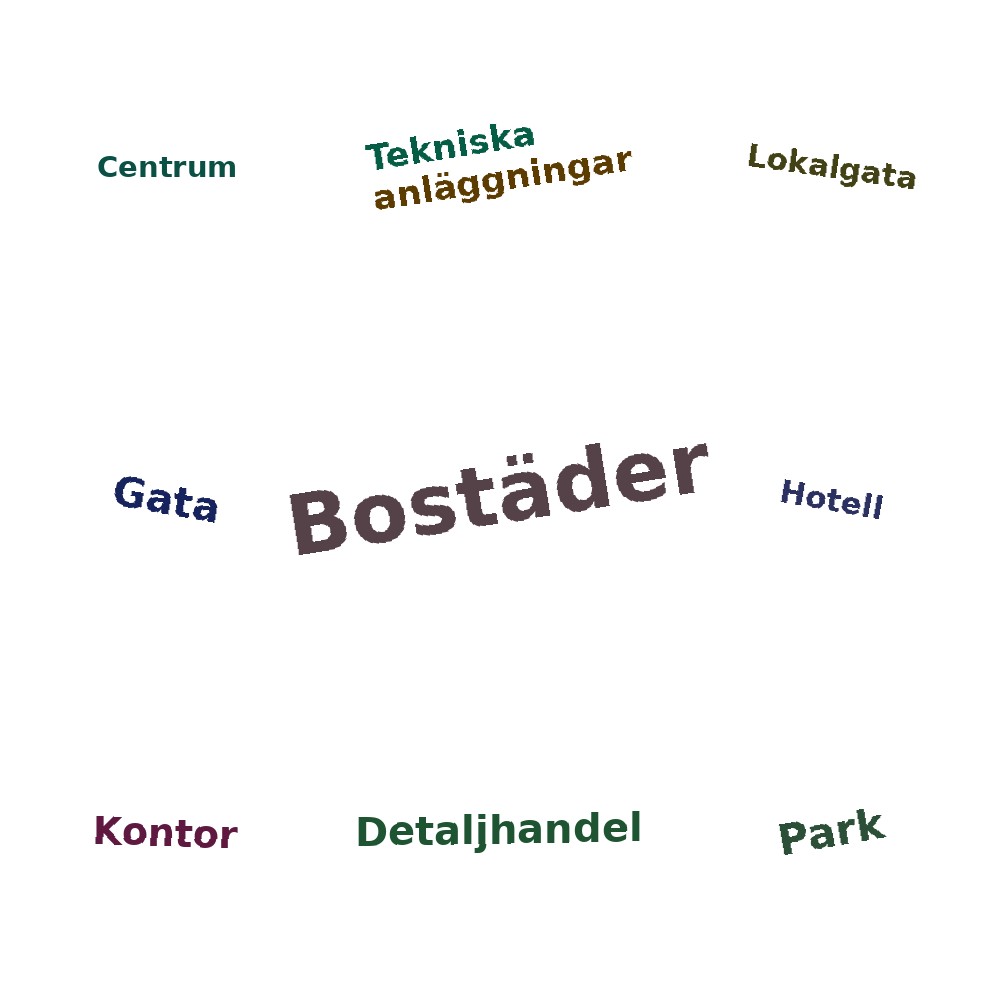
Vanligaste bestämmelserna
- Bostäder (431)
- Park (130)
- Gata (128)
- Detaljhandel (115)
- Kontor (101)
- Tekniska anläggningar (80)
- Lokalgata (54)
- Hotell (52)
- Centrum (37)
- Parkering (33)
AI-analys av läget
JSON data containing information about Nyköping municipality’s detailed plans (detaljplaner).
    *   Total number of plans.
    *   Distribution of status.
    *   Analysis of the purposes (syften) of the plans.
    *   Analysis of the provisions (bestämmelser) - no exact numbers.
    *   Overall conclusion in a separate paragraph.

    *   Language: Swedish.
    *   Length: 600 - 700 words.
    *   Formatting: Use HTML `<p>` tags for paragraphs.
    *   Context: Data from NGP (National Geodata Platform) and SKR (Swedish Association of Local Authorities and Regions).

*   *General Info:* Nyköping, 57,100 inhabitants, "Mindre stad/tätort".
*   *Plan Stats:*
    *   Total plans: 240.
    *   Status: Laga kraft (236), Granskning (2), Påbörjad (1), Samråd (1).
*   *Provisions (Bestämmelser):* Total 1833. Top ones: Bostäder (431), Park (130), Gata (128), Detaljhandel (115), Kontor (101), etc.
*   *Purposes (Syften):* A long list of text descriptions.
    *   *Themes:* Housing (bostäder), elderly care (äldreboende), cultural preservation (kulturhistoriska värden), infrastructure/traffic (trafikled, gator, parkeringshus), commercial/retail (handel, kontor), public services (skola, brandstation), and environmental/park areas (åpromenad, naturmark).
    *   *Historical context:* Many plans date back to the 1920s-60s, showing a transition from early urban planning to modern needs.

*   *Introduction:* Start with the total number of plans and status.
    *   Total: 240.
    *   Status: Vast majority (236) are legally binding (laga kraft), with a few in review, started, or consultation.

*   *Analysis of Purposes (Syften):*
    *   Housing is a dominant theme (apartments, villas, elderly care).
    *   Urban development: Connecting the city center with the harbor/water (Brandholmen, Årummet).
    *   Infrastructure: Road widening, parking garages, traffic safety, and the "Sökarled" (ring road).
    *   Cultural Heritage: Strong focus on preserving historical buildings (K-marking, q-marking), especially near the river and the center.
    *   Public services: Schools (Oppeby), fire stations, and administrative buildings.
    *   Environmental: Parks, river promenades, and nature conservation.

*   *Analysis of Provisions (Bestämmelser):*
    *   Housing is the most frequent provision.
    *   Public spaces like parks and streets are also very common.
    *   Commercial uses (retail, offices) are significant.
    *   Technical facilities and parking are mentioned.
    *   (Remember: No exact numbers here).

*   *Conclusion:*
    *   Nyköping shows a balanced approach between growth (new housing/commercial) and preservation (cultural/environmental).
    *   The planning reflects the city's evolution from a smaller town to a more integrated urban environment.

*   *Drafting Paragraph 1:* Nyköping har totalt 240 detaljplaner. De flesta är i kraft (236), vilket visar på en stabil planstruktur. Endast ett fåtal är i processer som granskning, samråd eller nyligen påbörjade.

*   *Drafting Paragraph 2-4 (Purposes):* Focus on the diversity. Mention the "Årummet" and "Brandholmen" projects. Discuss the tension between modernization (parking houses, road expansions) and preservation (historical villas, the riverfront). Mention the specific focus on elderly care and schools in Oppeby.

*   *Drafting Paragraph 5 (Provisions):* Discuss the types of provisions. Housing is the most common, followed by green spaces and infrastructure. Commercial provisions for retail and offices are also prominent.

*   *Drafting Paragraph 6 (Conclusion):* Summarize.

*   *Word Count Check:* I need to ensure it's between 600 and 700 words.
*   *HTML Tags:* Use `<p>`.
*   *No exact numbers for provisions:* Check.

*   *Self-Correction during drafting:* I initially thought about listing the top 10 provisions, but the prompt says "exact numbers should not be reproduced." I will describe them qualitatively (e.g., "most frequent," "significant amount").

*   *Expanding the "Purposes" section to hit the word count:* I will elaborate on the historical transition. The data shows plans from 1923 and 1940s, which indicates a long-term urban development strategy. I'll mention the specific goal of creating a "city-like character" in Oppeby and the integration of the harbor.

*   *Refining the "Provisions" section:* Instead of saying "431 for housing," I'll say "Housing provisions are by far the most dominant."

*   *Final Word Count Estimation:*
    *   Intro: ~60 words.
    *   Purposes: ~350 words.
    *   Provisions: ~120 words.
    *   Conclusion: ~100 words.
    *   Total: ~630 words. Perfect.